What Is AI Voice Cloning? How It Works, What It Costs, and the Consent Rules Creators Need to Know
Updated on October 1, 2026.
Last month a podcast editor I work with sent me a 45-second clip and asked if I could “fix the intro.” The host had flubbed two sentences. Instead of scheduling a re-record, I typed the corrected lines into ElevenLabs, generated them in the host’s cloned voice, and spliced them in. The host listened back and couldn’t identify which three seconds were synthetic. That’s the state of this technology in 2026 — and it’s also exactly why the legal and ethical rules around it have gotten very specific, very fast.
This explainer covers what AI voice cloning actually is at a technical level, the two distinct types you’ll encounter on every platform, what creators legitimately use it for, what it costs right now, and the consent landscape that determines whether your use is legal or a liability.
What Voice Cloning Actually Is
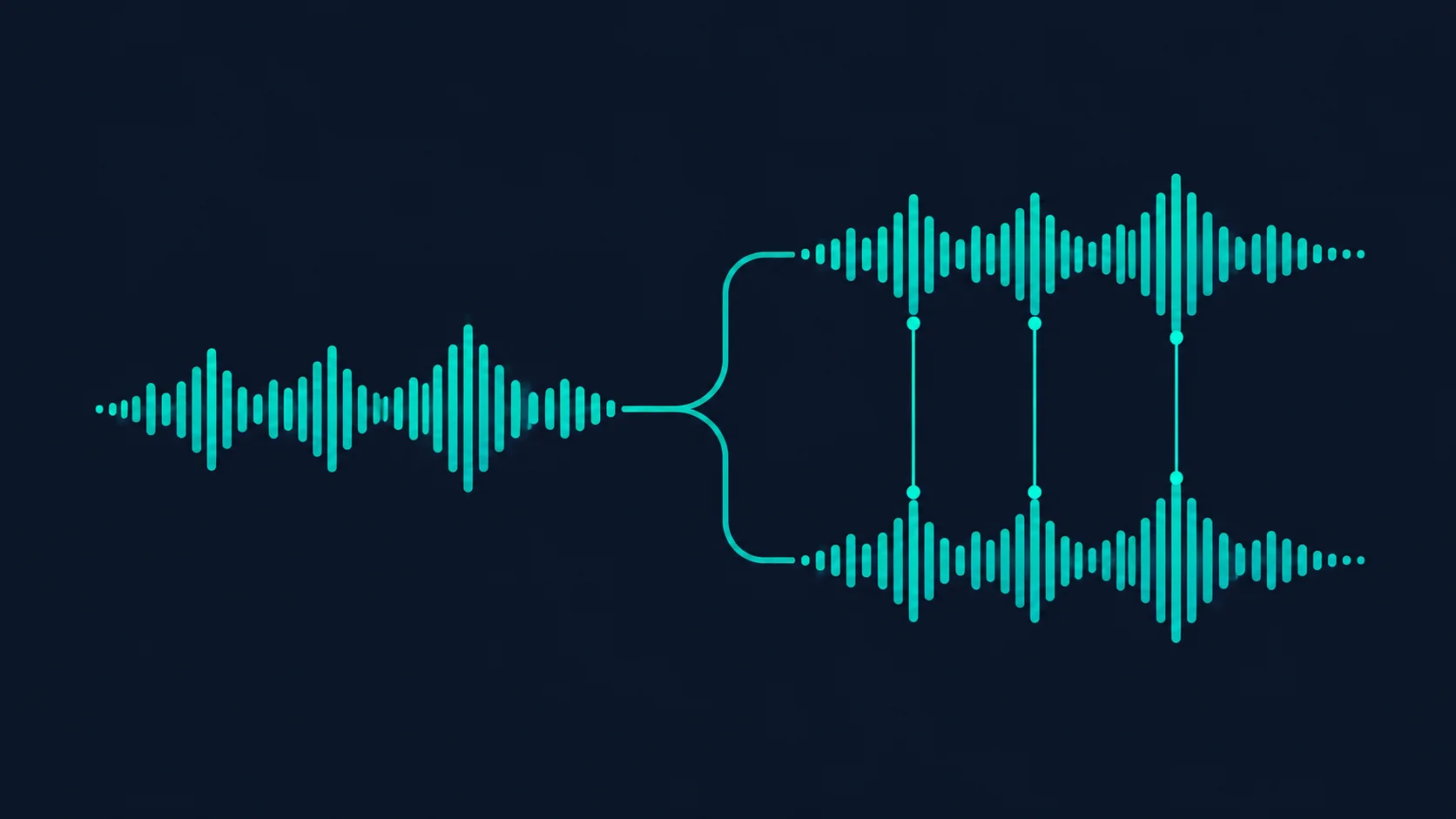
AI voice cloning is the process of creating a synthetic replica of one specific person’s voice from a sample of their recorded speech, then using that replica to generate entirely new sentences the person never actually said.
The critical distinction: a cloned voice is not a generic text-to-speech narrator. Standard TTS reads your text in a preset voice from a catalog. Voice cloning first learns what makes your voice yours — the pitch range, the rhythm between words, the slight rasp on certain consonants, the way your energy drops at the end of sentences — and then generates new speech carrying all of those characteristics.
The result can say anything, in any supported language, with controllable pacing and emotion. The clone is not a recording being played back. It is a model that has learned the statistical shape of a voice and can produce novel audio in that shape.
The two types you’ll encounter everywhere
Every voice cloning platform uses some version of these two approaches, and the names are remarkably consistent across vendors:
Instant cloning (zero-shot). You upload a short sample — anywhere from 5 seconds to 2 minutes of clean audio — and the system extracts a “speaker embedding,” a mathematical fingerprint of the voice. No training step. The clone is usable within seconds. Quality is good for narration, voiceovers, and short-form content. This is what runs on lower-tier plans.
Professional cloning (fine-tuned). You upload 30 minutes to several hours of varied speech. The system trains a dedicated model on that data, capturing emotional range, micro-pauses, breathing patterns, and the way the voice shifts across registers. Processing takes 3–6 hours. The output is meaningfully more stable across long-form use — audiobooks, multi-hour courses, brand voices that need to sound identical across hundreds of pieces of content.
The quality gap between the two has narrowed sharply in 2026. For most creator work — YouTube narration, podcast intros, course voiceovers — instant cloning produces results listeners don’t question. Professional cloning still holds an edge for dramatic performance and very long-form consistency.
How It Works (Without the Jargon)
The pipeline behind every commercial voice cloning tool runs three stages in sequence:
Stage 1: Speaker embedding
A neural network listens to your reference audio and compresses the voice into a compact numerical vector. This embedding captures the acoustic traits that make the voice recognizable: pitch distribution, formant patterns (the resonant frequencies shaped by your vocal tract), speaking rhythm, and tonal range. The system learns by being asked millions of times “are these two clips the same person?” — so it gets very good at separating who is speaking from what they’re saying.
Stage 2: Acoustic modeling
A second model takes your text input (converted into phonemes, the distinct sound units of language) plus the speaker embedding from Stage 1, and produces a time-frequency map of what the speech should sound like. This is where the “what to say” meets “who should say it.”
Stage 3: Vocoder
The time-frequency map is not yet audible sound. A vocoder — modern systems use architectures like HiFi-GAN or BigVGAN — converts that map into an actual audio waveform at 24 to 44 kHz. This stage is why modern clones sound smooth rather than robotic.
The entire pipeline runs in seconds for instant cloning. For professional cloning, Stage 2 involves fine-tuning the model’s internal weights on your specific voice data, which is why it takes hours.
How much audio do you actually need?
The honest numbers from testing across platforms:
| Sample length | What you get |
|---|---|
| 5–15 seconds | Recognizable timbre, slightly robotic cadence, no emotional range |
| 30 seconds | Natural-sounding neutral speech, limited expressiveness |
| 2–3 minutes (varied) | Good for narration, e-learning, informational content |
| 30+ minutes (varied, dynamic) | Professional-grade: audiobooks, character work, brand voices |
The word “varied” matters more than the duration. Three minutes of you reading in different emotional registers — excited, calm, questioning, emphatic — produces a better clone than ten minutes of flat monotone script. The model learns your range, not just your pitch.
What Creators Actually Use It For
The legitimate use cases cluster around a few patterns:
Fix and extend without re-recording
The most common creator use. You recorded a 20-minute video and mispronounced one name, or a client requested a line change after delivery. Type the corrected sentence, generate it in your cloned voice, splice it in. No studio time, no re-setup, no “can you send me a new take?”
Consistent channel narration at scale
Creators publishing daily or multiple times per week use a clone to maintain vocal consistency without burning out their actual voice. The clone handles the B-roll narration, the intro/outro, the repeated segments. The creator records the parts that need genuine energy and improvisation.
Multilingual dubbing with voice preservation
Clone your voice from English audio, then generate narration in Spanish, Hindi, or Japanese. The cloned voice retains your vocal identity across languages. ElevenLabs supports this across 70+ languages; Fish Audio covers 80+. One creator can now reach audiences in a dozen languages without hiring voice actors for each.
Accessibility and voice banking
People facing voice loss from conditions like ALS can record their voice while they still have it, then continue to communicate through assistive devices using a synthetic version that sounds like them rather than a generic robot voice. Former NFL linebacker Tim Shaw, who lost his natural voice to ALS in 2020, uses a cloned version of his pre-diagnosis recordings to speak with his family.
Audiobook and course production
Self-published authors narrate entire books in their own voice without weeks in a recording booth. Course creators update a single module by editing text rather than re-recording an hour of audio.
For a broader look at how voice tools fit into a creator’s production stack alongside video and image generation, my roundup of the best AI voice generators covers the current options in more detail.
What It Costs in 2026
Pricing in this space moved significantly in 2026. Here’s the current landscape using ElevenLabs as the reference point (it remains the most widely used platform for voice cloning specifically):
| Plan | Monthly price | Voice cloning included | Credits/month (~minutes of audio) |
|---|---|---|---|
| Free | $0 | None (pre-made voices only) | 10,000 (~10 min) |
| Starter | $6 | Instant Voice Cloning | 30,000 (~30 min) |
| Creator | $22 ($11 first month) | Professional Voice Cloning | 121,000 (~121 min) |
| Pro | $99 | Professional Voice Cloning | 600,000 (~600 min) |
| Scale | $299 | Professional + 3 seats | 1,800,000 (~1,800 min) |
Key details that affect budgeting:
- Instant cloning starts at $6/month on Starter. This includes commercial licensing. The free tier does not include cloning at all.
- Professional cloning starts at $22/month on Creator. The $11 first month is a promotional price, not the ongoing rate.
- Credits are shared across text-to-speech, speech-to-text, music generation, and dubbing. If you use multiple features, your effective audio minutes drop.
- Annual billing saves roughly 17% (you pay for 10 months, get 12). Creator drops to an effective $18.33/month.
- Free tier requires attribution and prohibits commercial use. You cannot monetize content made on the free plan.
For creators who need voice cloning but want to compare options beyond ElevenLabs — including free and open-source alternatives like Chatterbox (MIT-licensed, 5-second cloning) — the best AI tools for content creators comparison covers the broader ecosystem.
The Consent and Legal Landscape
This is where the technology stops being a simple productivity tool and becomes something you need to be careful with. The rules tightened considerably in 2025 and 2026.
The core rule
Cloning your own voice is legal everywhere. Cloning someone else’s voice without their explicit consent is increasingly illegal and always ethically wrong. The platform’s checkbox asking “do you have rights to this voice?” does not protect you legally — you are the one accountable for how the clone gets used.
What’s actually in force as of late 2026
European Union. Article 50 of the EU AI Act requires that any AI system generating synthetic audio must mark the output in a machine-readable format as artificially generated. Users must disclose AI-generated content when it depicts real persons. These transparency obligations took effect August 2, 2026. Penalties for violations reach €15 million or 3% of annual global turnover.
United States. No single federal law governs voice cloning yet, but the landscape is filling in:
- Tennessee’s ELVIS Act (2024) was the first state law to explicitly extend right-of-publicity protection to AI-generated voice clones, with both civil and criminal penalties.
- California’s AB 1836 and AB 2602 target unauthorized digital replicas of performers, living and deceased.
- The NO FAKES Act, which would create a federal right controlling unauthorized AI replicas of voice and likeness, unanimously cleared the Senate Judiciary Committee in June 2026. It still needs full House and Senate passage.
- The FTC’s Impersonation Rule (effective April 2024) provides enforcement tools against AI-driven impersonation of businesses and government. An extension covering individual impersonation is still in rulemaking.
Platform policies. YouTube requires disclosure when synthetic content makes it appear a real person said something they didn’t. However — and this matters for creators — YouTube’s guidance explicitly states that cloning your own voice for your own content does not require disclosure. The trigger is fabrication of another person’s speech, not the use of AI narration on honestly presented content.
What this means practically for creators
- Clone your own voice freely. No disclosure needed on YouTube for your own content narrated in your own cloned voice.
- Never clone a client’s, collaborator’s, or public figure’s voice without written consent. Even with verbal permission, get it in writing specifying the use, duration, and context.
- Label AI-generated voice content when it could be mistaken for a real person speaking, especially if you serve EU audiences.
- Read the terms of service of whichever tool you use. ElevenLabs updated its TOS in early 2025 to claim broad rights over uploaded voice data. Understand what you’re granting.
Where This Technology Still Falls Short
Honest limitations that matter for production decisions:
Emotional performance. Clones handle conversational and narrative speech well. Highly dramatic, comedic, or improvised performance — subtle timing, genuine laughter, the crack in a voice during a difficult moment — still belongs to human actors. The clone can approximate; it cannot surprise.
Singing and non-speech vocalization. Most cloning engines are tuned for speech. Singing, whispering, shouting, and heavy character voices produce inconsistent results unless the tool specifically supports them.
Real-time latency. Live, near-zero-delay voice cloning for phone-speed conversation is improving but still demanding. For pre-rendered content — videos, audiobooks, courses — this doesn’t matter. For live applications, it’s still a constraint.
The “uncanny” middle. A clone that’s 95% right can be more unsettling than one that’s obviously synthetic, because listeners sense something is off without being able to name it. This shows up most in very familiar voices — your own voice, or someone your audience hears weekly.
Who Is This For
- Podcasters and YouTubers who need consistent narration without re-recording every minor correction
- Course creators producing multi-hour audio content that needs periodic updates
- Self-published authors narrating audiobooks in their own voice without studio budgets
- Multilingual creators expanding into new language markets while keeping their vocal identity
- Anyone considering voice cloning who needs to understand the consent boundaries before starting
If you’re already using AI for video or social content and voice is the next piece of your production workflow, my guide on how to use AI for social media covers how audio, video, and text generation fit together in a single content pipeline.
FAQ
Is AI voice cloning legal?
Cloning your own voice is legal in all major jurisdictions. Cloning someone else’s voice without their explicit consent is illegal in a growing number of jurisdictions (Tennessee, California, the EU under the AI Act) and violates platform policies everywhere. The legal risk falls on the person who creates and uses the clone, not on the software provider.
How much audio do I need to clone my voice?
For instant cloning: 1–2 minutes of clean, varied speech produces a usable result. For professional cloning: 30 minutes minimum, with 2–3 hours recommended for the highest fidelity. Clean audio matters more than duration — no background music, no overlapping voices, consistent microphone distance.
Can listeners tell the difference between a cloned voice and the real one?
For narration and informational content, most listeners cannot reliably distinguish a well-made clone from the original. For emotional performance, comedy timing, and very familiar voices, the gap is still detectable. In my experience editing podcasts, a clone handling B-roll narration goes unnoticed; a clone trying to deliver a punchline usually doesn’t land.
Do I need to disclose that my content uses a cloned voice?
If you’re cloning your own voice for your own content: YouTube does not require disclosure. If you’re using a synthetic voice to depict another real person saying something they didn’t say: disclosure is required on major platforms and legally mandated in the EU. When in doubt, disclose — it costs nothing and builds audience trust.
What’s the cheapest way to try voice cloning?
ElevenLabs’ Starter plan at $6/month includes instant voice cloning with commercial licensing. For a zero-cost experiment, the open-source Chatterbox model (MIT-licensed) clones from 5 seconds of audio with no watermark, though it requires a local GPU with 10+ GB VRAM to run.
Sources: